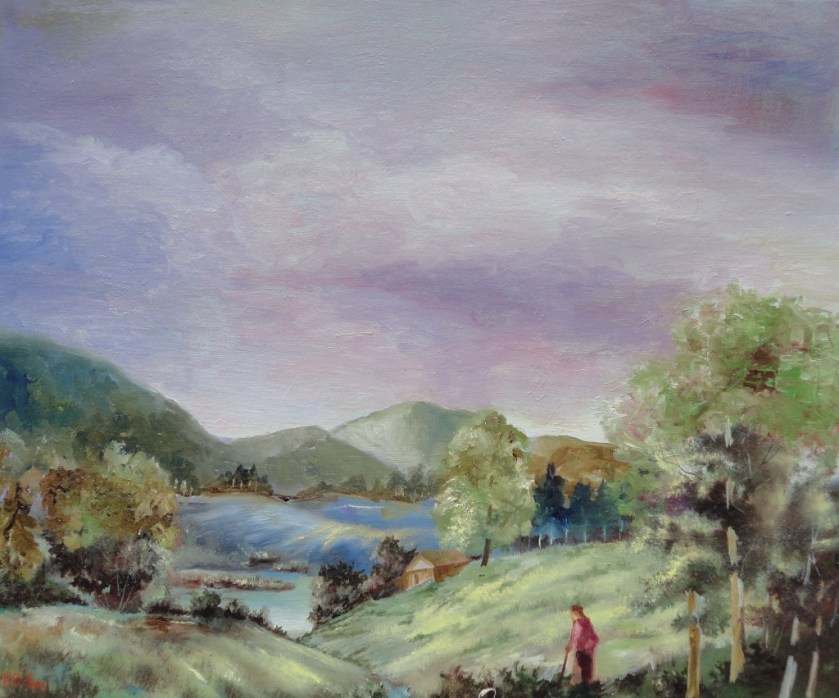
I was experimenting with oil paint and trying to create a landscape “like the old masters” when I painted this. Not sure I succeeded, but I had fun trying.
I was experimenting with oil paint and trying to create a landscape “like the old masters” when I painted this. Not sure I succeeded, but I had fun trying.
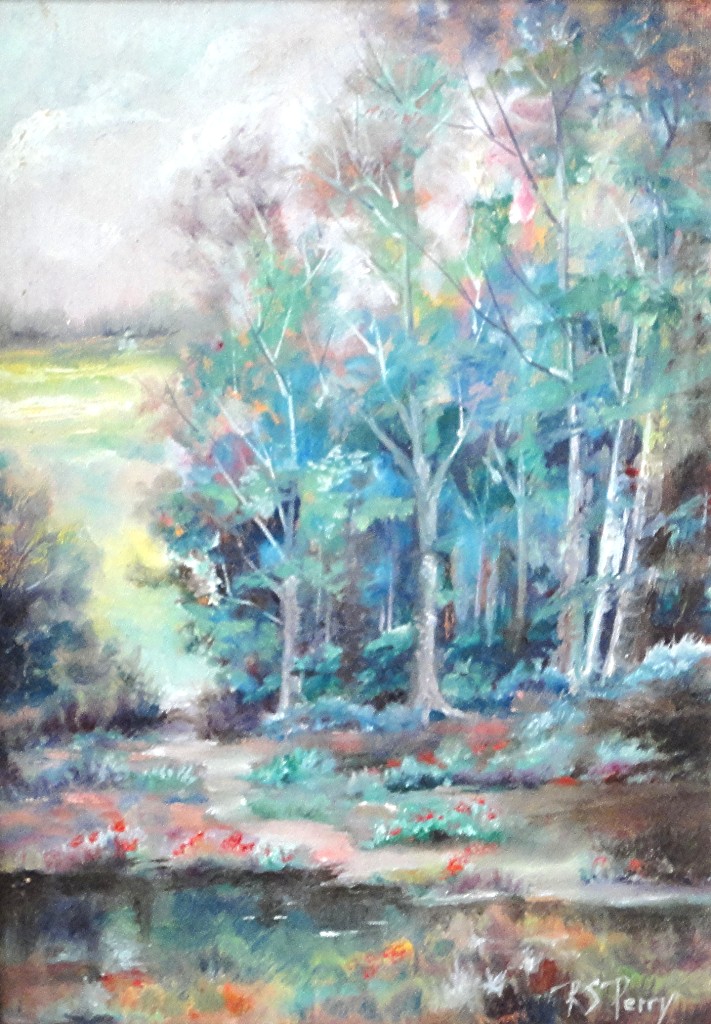
This is a small landscape done from a photograph.
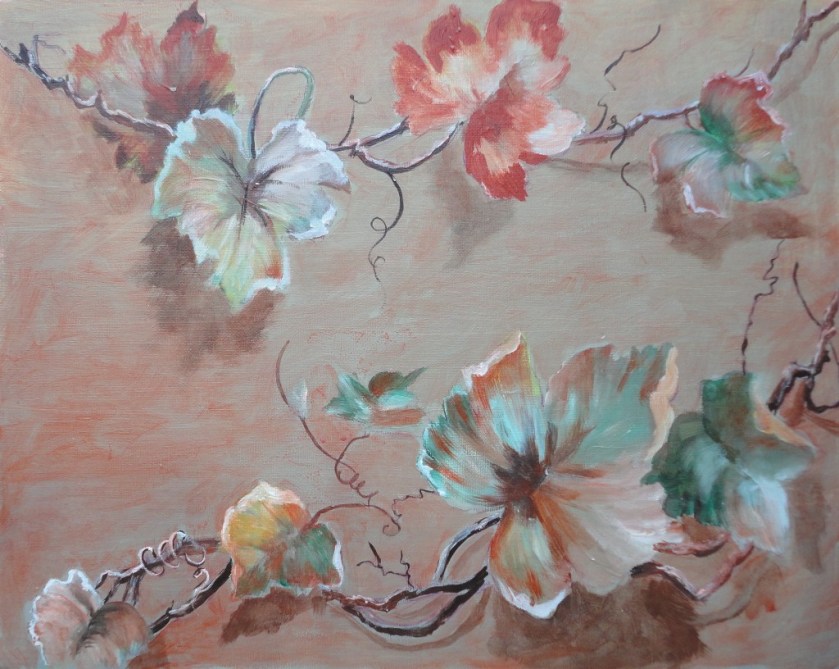
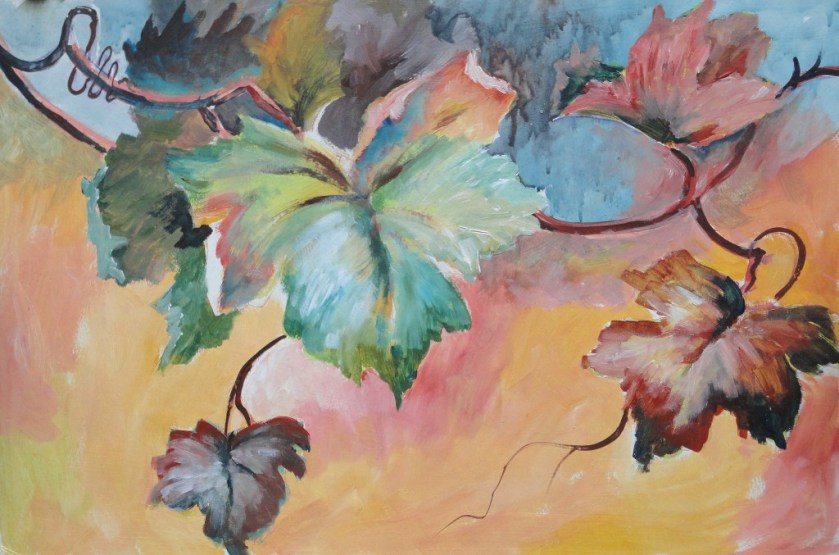
This is my painted model for a wall mural that I recently completed in Mitchell House of Trinity Episcopal Cathedral, Little Rock. I was asked to paint this on the wall. Someone else had previously written on the wall ” I am the Vine, You are the Branches'” from the scriptures, John 15: 5.
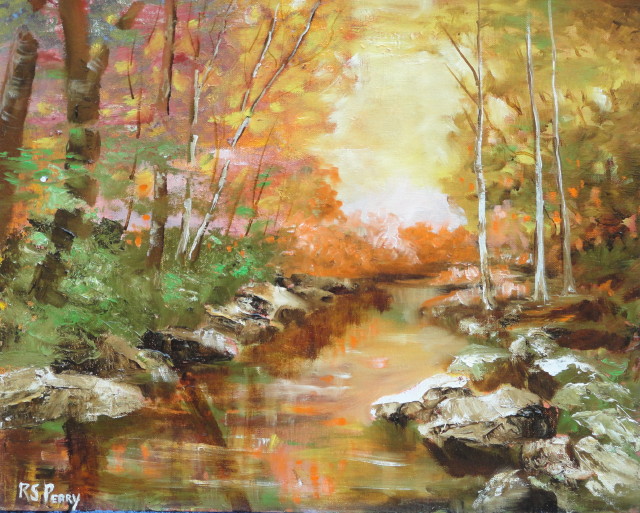
This painting was done in oil and I had to wait 6 months before I could varnish it, so it did not get posted in the fall of 2016. The rocks were painted quite heavily and I was afraid that the oil would crack if I varnished too early. Many artists believe that you can varnish after one month, and I have done this, too, but only if the paint film is not heavy.
This was done using a photograph of the ocean. Then I found a photograph of a child and painted a different outfit on her, thus combining two different images. I often combine different photographs to come up with a painting.
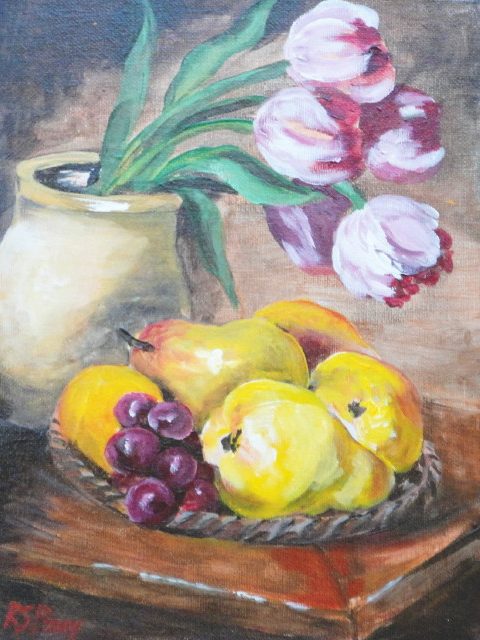
Pears are a favorite subject of mine to paint. I’ve done lots of them.It is generally better to paint 3, 5, or 7 pears and not an even number. Some think that two objects can be boring, but three is exciting! In this painting I tried to remember a technique I learned from watching Julie Ford Oliver’s web site and blog. She calls it fracturing (avoiding too many sharp edges) and she achieves wonderful results with this.
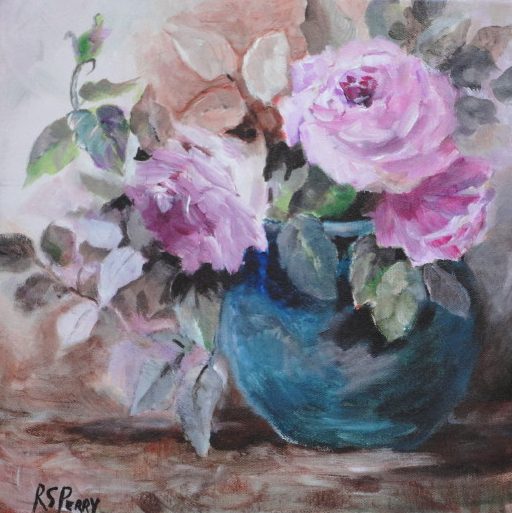
Somewhere I remember admiring roses in a blue bowl, so I decided to try to paint a blue bowl with roses in it. My model was actually a white bowl, but after I carefully shaded it and painted it in white, I used glaze and glazed over it with blue. The shadows can easily be seen through the glaze. It is an old master technique that I learned a long time ago–paint everything in brown tones with careful shading and then glaze over with color.
This is a simple study that I painted on a panel. I often use small panels to try out techniques or colors. I like to work on small canvasses. I think that a common mistake for many students is to paint over life size without a good reason.
The darks in this painting are applied very thinly.
Every year (except this one) I have bought tulips and planted them in large pots so I could have painting material in the spring. This past October was so warm and dry that I knew it would be hard to grow tulips because they require at least 6 weeks of cold weather to bloom. So I dug out my trusty artificial tulips and found a few photographs of tulips to paint this picture.
Here’s a technique tip: You can remove acrylic varnish with alcohol but you can make corrections on top of Liquitex gloss or matt medium varnish. Remember to reseal the entire painting with varnish when you have finished.
Last week’s post was a sunflower painting. Today I am using the same models but rearranging them. Next week you will see another version of sunflowers. I like to do a series of paintings on the same theme.




 Cronesinger.com